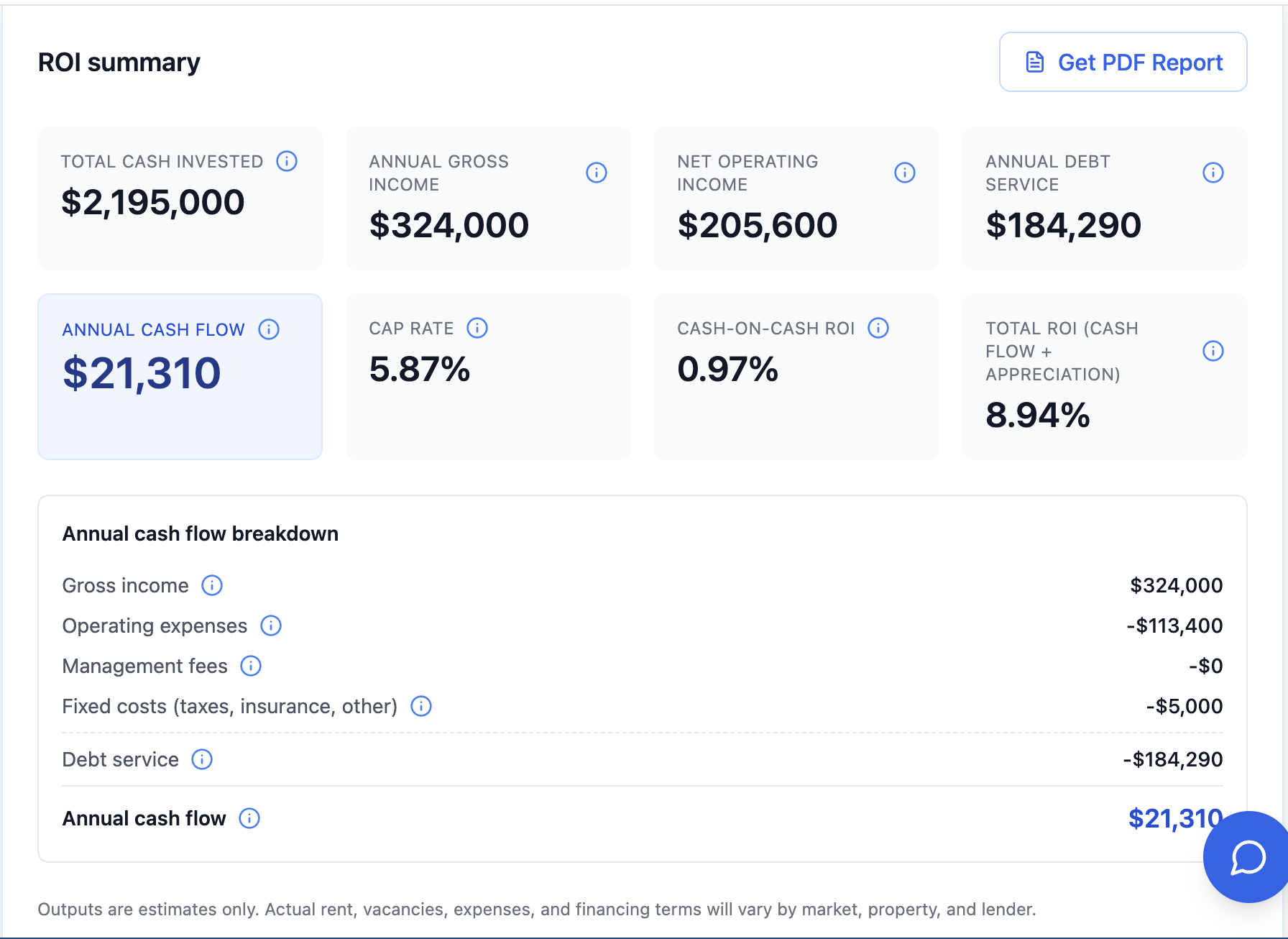
Why Estimating Mexico Construction Costs Catches Most People Off Guard
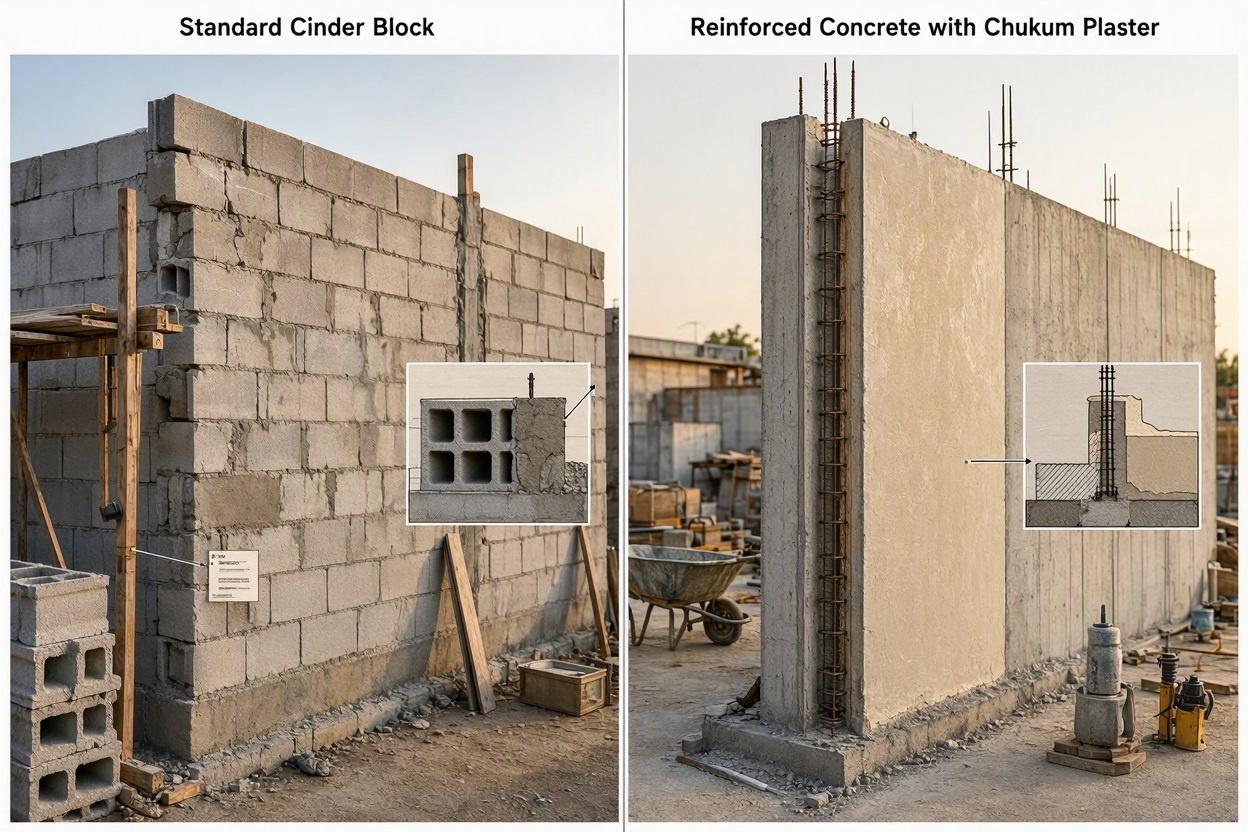
I've spent over a decade managing jobsites across Mexico, and I can tell you straight up: people don't blow their budgets because cement suddenly doubled in price. They blow their budgets because they run their numbers using North American assumptions or sketchy back-of-the-napkin math from an internet forum.
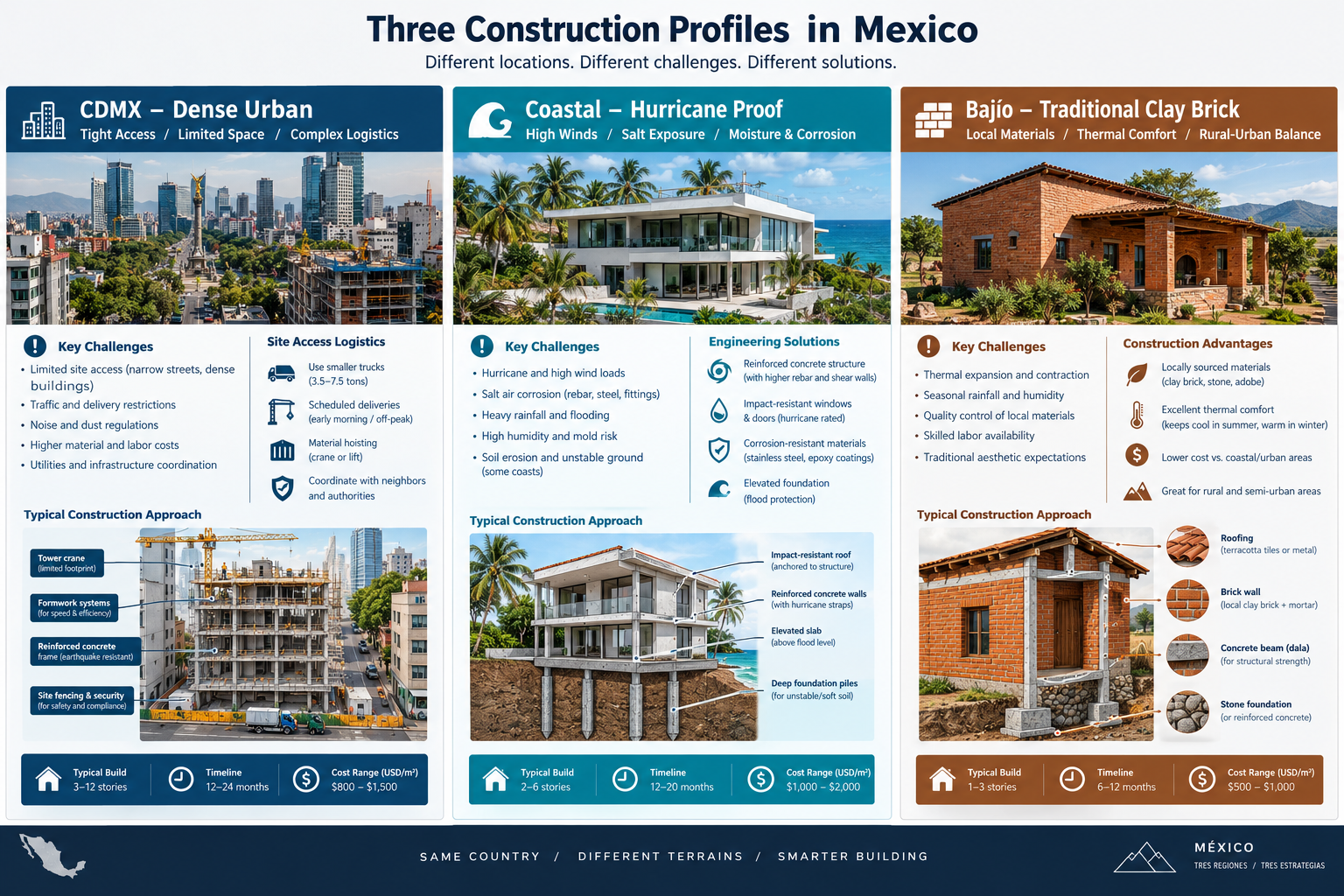
Here's the harsh truth. If someone tells you that you can build a house for $600 USD per square meter across the board, walk away. In some rural parts of Oaxaca, maybe you can slap together a basic block structure for that, but try doing high-end residential work in places like Providencia, Guadalajara or coastal resort towns, and you'll run out of cash before the roof goes on.
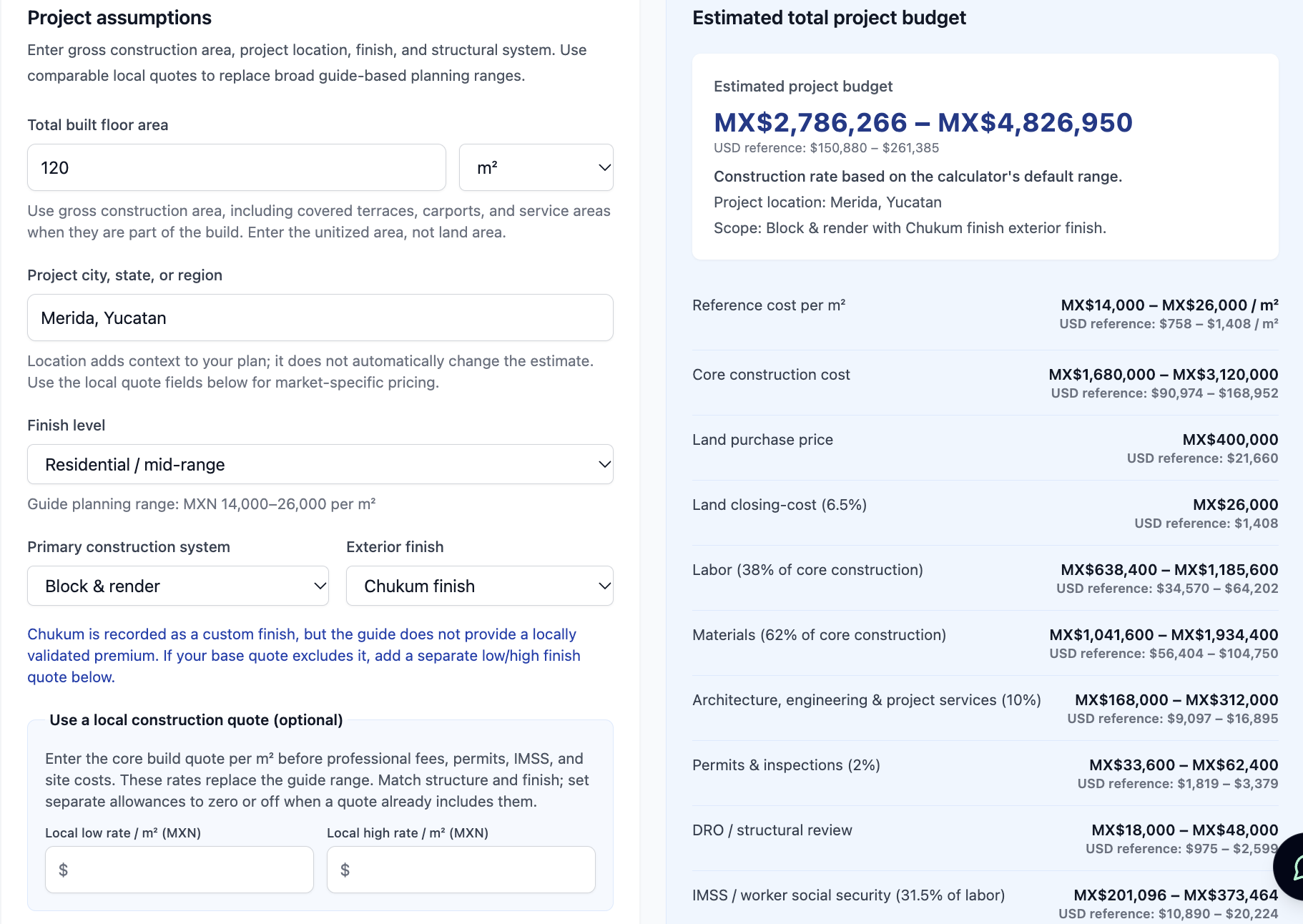
That's why a specialized tool like the PropTrenz Mexico House Construction Cost Calculator is crucial. It doesn't treat Mexico as a single monolithic market. It takes into account regional labor rate swings, finishing quality tiers, and the hidden statutory fees that swallow up your working capital before the foundation trenches are even dug.
- Regional labor variation can swing your total labor budget by 35% to 55% between southern inland states and northern border or coastal tourist hubs.
- Exchange rate volatility between the Mexican Peso (MXN) and US Dollar (USD) directly affects imported items like inverter AC systems, high-spec glazing, and architectural hardware.
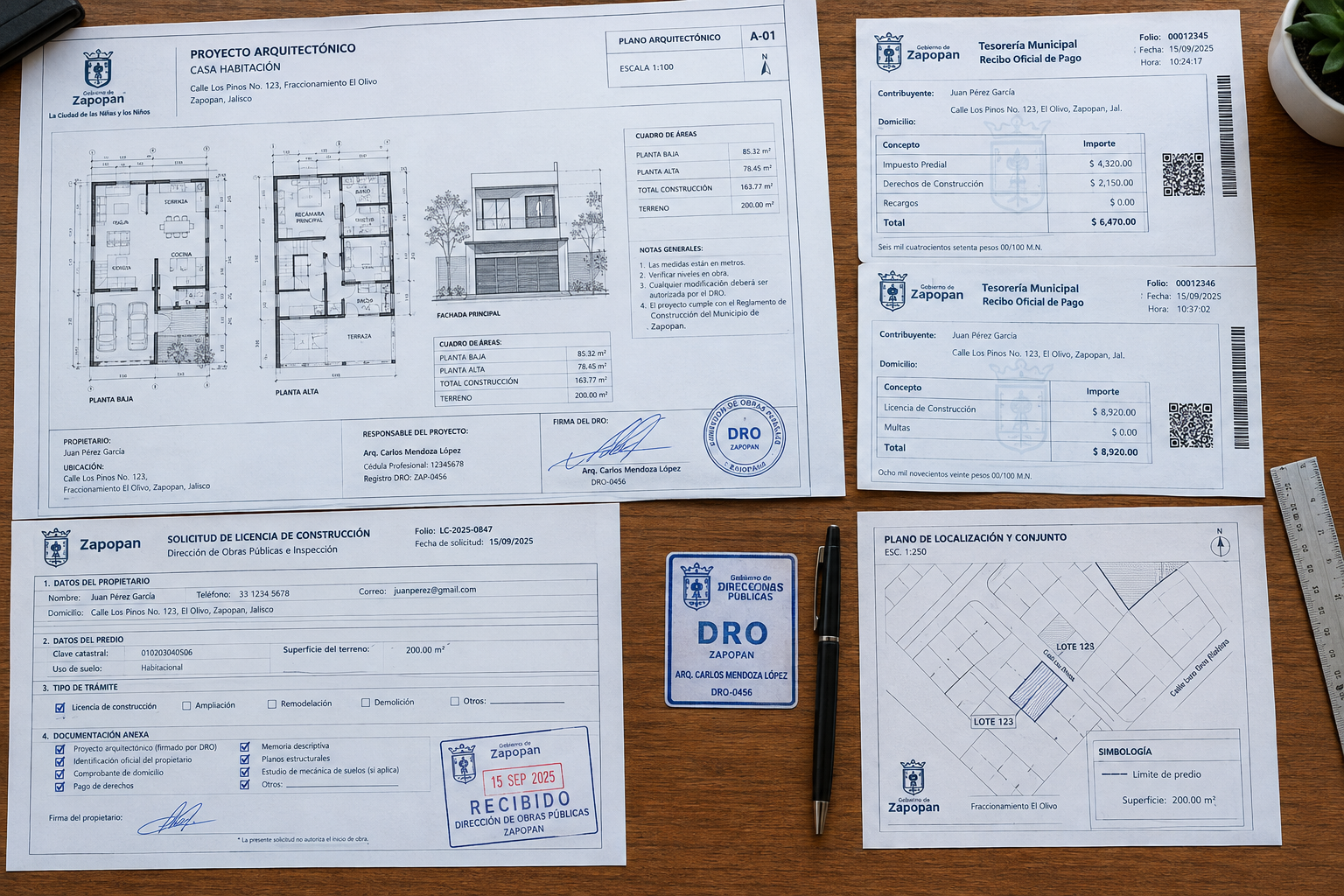
- Municipal building license fees vary wildly by city and are typically calculated per covered square meter based on your project's cadastral classification.
- Site topography directly dictates foundation engineering; rocky limestone requires heavy hydraulic breaker machinery, while sandy soils require deep helical piles or expansive raft slabs.
Average Baseline Construction Cost (Mid-Grade)
$14,000 - $22,000 MXN / m²
Luxury Architectural Grade
$28,000 - $45,000+ MXN / m²
Breaking Down Labor and Materials in Mexican New Construction
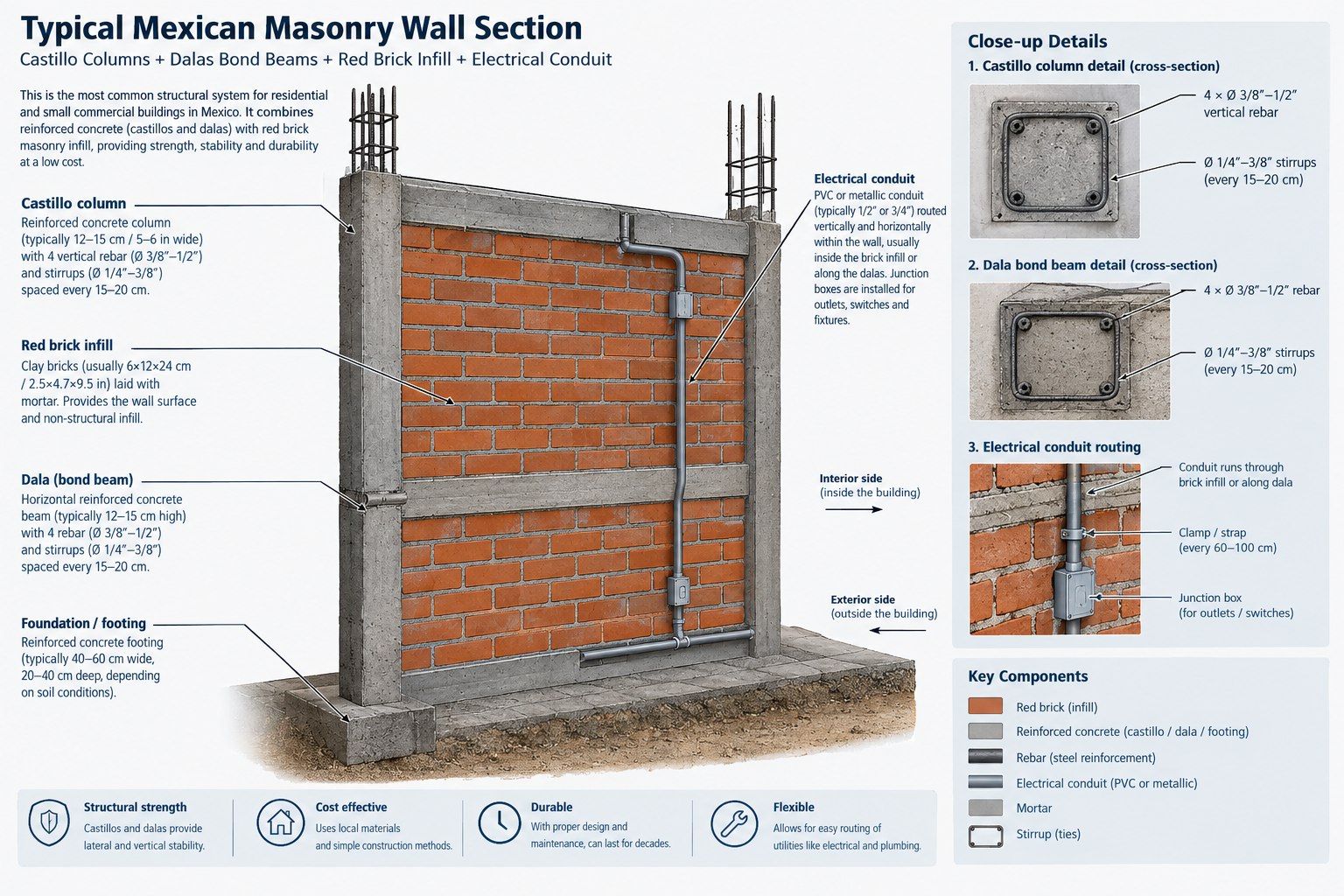
In Mexico, your construction budget breaks down into a completely different ratio than what you might be used to in the US or Canada. Up north, labor eats 60% of your budget while materials take 40%. Down here, it flips: materials routinely make up 60% to 65% of your direct costs, while physical labor sits between 35% and 40%.
Take concrete, rebar, and red brick (ladrillo rojo) or structural block. These are your heavy lifters, and their prices track broader commodity indexes. When I order structural 3/8-inch rebar (varilla) by the ton or bulk Cemex Portland cement, I pay spot market prices that don't care about your design aesthetic.
Labor seems cheap when you look at an albañil's (mason's) daily rate. But here's what trips up every amateur: the social security payments to IMSS (Instituto Mexicano del Seguro Social). Skip accounting for official IMSS contributions in your calculator inputs, and inspectors will shut down your job site faster than you can say 'permiso'.
- Direct trade labor wages must include mandatory provisions for Sunday pay (prima dominical), paid federal holidays, and end-of-year bonuses (aguinaldo).
- IMSS registration for your construction crew adds roughly 25% to 38% on top of raw take-home wages, depending on your registered risk tier (Clase V for construction).
- Curing times for structural reinforced slabs require a standard minimum 28 days to hit full compressive strength, directly affecting equipment rental durations.
- Material wastage factors in Mexico must be budgeted higher (10% to 15%) due to site handling, on-site mortar mixing, and manual masonry cuts.
Typical Labor-to-Materials Split
40% Labor / 60% Materials
IMSS Worker Premium Load
+28% to +36% over base pay
Buying Land: Site Prep Realities That Wreck Your Budget
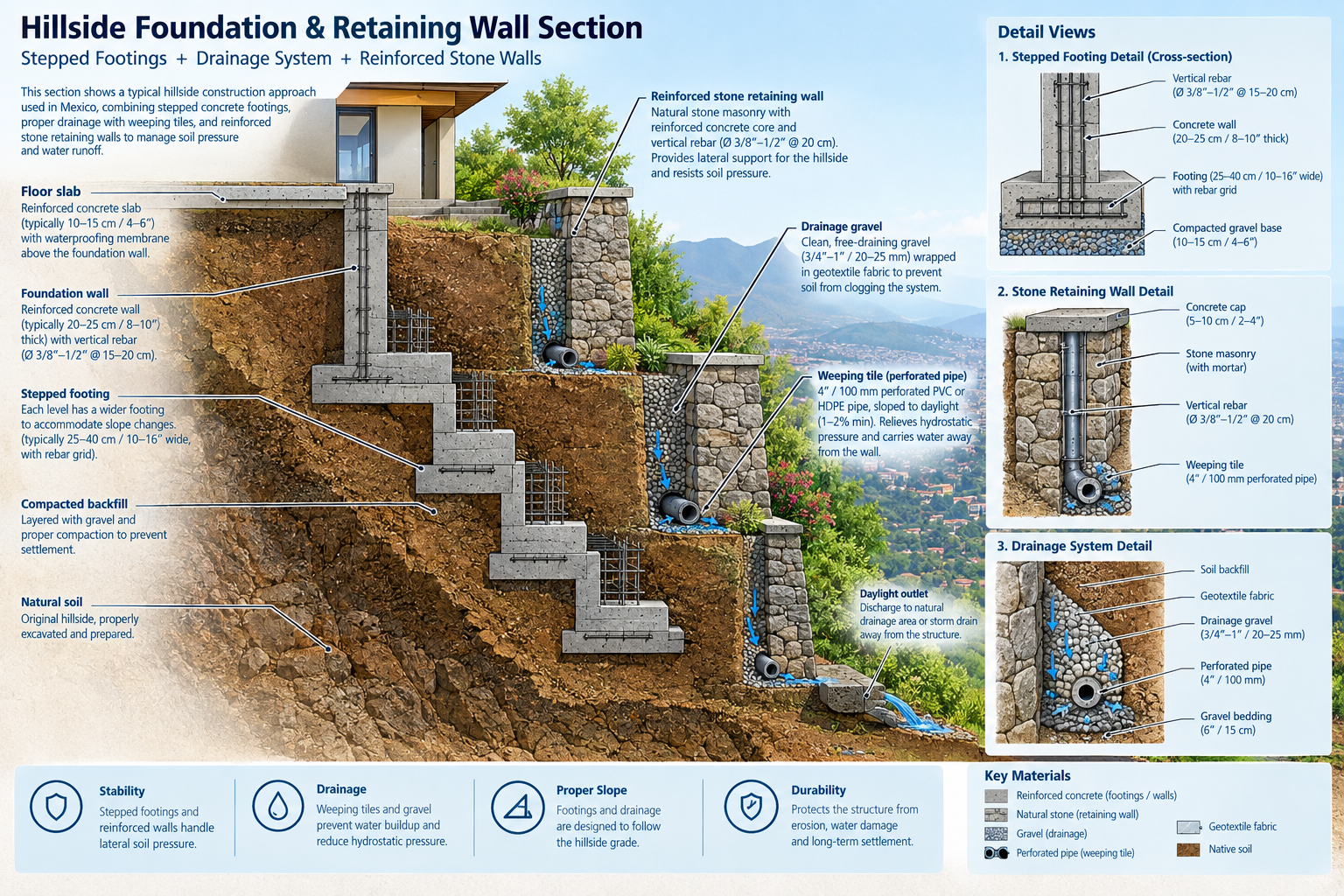
Most people run the calculator after buying land, which is exactly backwards. The plot you choose dictates 15% to 30% of your actual structural spend. If you pick a flat, clean lot in an established urban sector like Temozon Norte, Mérida, your foundation costs remain predictable.
Take a sloping lot with panoramic views on the outskirts of town, however, and you've just bought yourself thousands of cubic meters of retaining walls (muros de contención). I've had clients spend thirty grand in US dollars just securing a hillside before pouring a single square meter of livable floor.
You also have to look closely at utility access. If the Comisión Federal de Electricidad (CFE) transformer sits three poles down the road, guess who pays for the new concrete pole and the step-down transformer? You do. Plug those civil infrastructure costs into your initial site prep calculations before you finalize your total construction budget.
- A formal soil study (estudio de mecánica de suelos) costs roughly $18,000 to $35,000 MXN and prevents disastrous foundation settling or over-engineering.
- Topographical surveys (levantamiento topográfico) with digital contour intervals are mandatory before drawing up structural foundation calculations.
- Connecting to municipal water networks (SACMEX or municipal water boards) frequently requires separate connection rights fees (derechos de conexión).
- Clearing rocky land (desmonte y despalme) requiring dynamic pneumatic breaker backhoes adds roughly $1,200 to $1,800 MXN per operating hour.
Soil Mechanics Study Cost
$18,000 - $35,000 MXN
CFE Dedicated Transformer Installation
$65,000 - $140,000 MXN
Step-by-Step: Setting Parameters in the PropTrenz Real Estate Calculator
When you sit down with our calculator, don't just pick 'standard' and guess your square footage. Start by specifying your municipal jurisdiction accurately, because labor zones established by the Comisión Nacional de los Salarios Mínimos (CONASAMI) alter base wage inputs across different states.
Next, define your gross construction area (m² de construcción) rather than just interior air-conditioned space. In Mexico, covered terraces, roofed carports, exterior mechanical rooms, and subterranean cisterns all demand foundation footings, concrete slab covers, and structural labor. If you leave out your 40 m² pool deck and double carport, your real-world spend will overrun your estimate by twenty grand minimum.
Finally, calibrate your finishes (acabados). A baseline project uses commercial ceramic tile and painted plaster, while luxury projects integrate polished parota woodwork, quartz counters, and specialized waterproof microcements like Mayan chukum. Dialing in the correct finish category aligns your material budget with reality.
- Step 1: Input your exact municipality to automatically capture regional supply chain freight markups and localized trade labor rates.
- Step 2: Enter total covered structural area including covered verandas, perimeter walls (bardas perimetrales), and the underground water cistern (cisterna).
- Step 3: Select your foundation archetype: shallow strip footings (zapatas corridas), isolated footings (zapatas aisladas), or reinforced structural slab (losa de cimentación).
- Step 4: Configure MEP specifications (mechanical, electrical, plumbing) such as solar arrays, pressurized hydropneumatic pumping systems, and water softeners.
- Step 5: Apply the finishing grade slider, selecting between Basic/Social, Medium Residential, High Residential, or Luxury/Resort levels.
Underground Cistern Construction (10,000L)
$45,000 - $85,000 MXN
Perimeter Privacy Wall (per linear meter)
$2,200 - $3,800 MXN
Create a free account to unlock this guide
Create a complimentary PropTrenz account to unlock premium due diligence guides.
Get Started
Create Account
Already Have Account