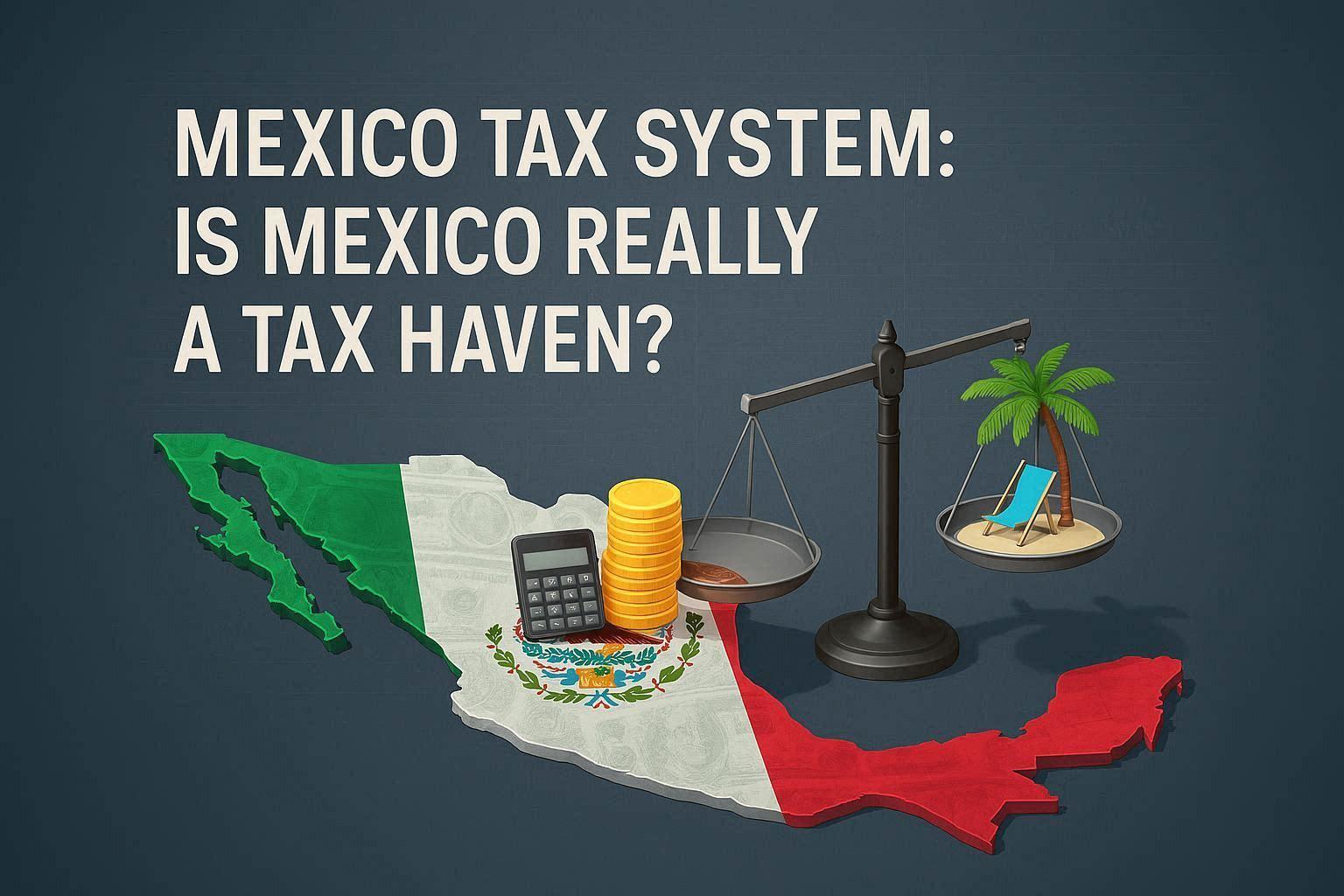
Is Mexico Truly a Tax Haven? Understanding the Basics
Okay, let's get right to it. You've probably heard whispers about Mexico being a tax haven. It's not quite that simple, but it can offer some significant tax advantages, especially for expats and those looking to invest in real estate. The thing is, the Mexican tax system is different than what you're probably used to, and understanding those differences is key. I've seen folks get into trouble thinking it's a completely free-for-all.
What most people don't realize is that Mexico operates on a residency-based tax system. This means if you're a tax resident, you're taxed on your worldwide income. But, and this is a big but, if you're not a tax resident, you're generally only taxed on income sourced within Mexico. This is where some of the 'tax haven' talk comes from.
Now, before you pack your bags and assume you'll never pay taxes again, let's dig into the details. It's crucial to understand what it means to be a tax resident and how that affects your tax obligations. Because trust me, SAT – the Mexican tax authority – isn't messing around. They're cracking down on tax evasion, so you wanna dot your i's and cross your t's.
- Mexico uses a residency-based tax system; global income is taxed for residents.
- Non-residents are generally only taxed on income sourced within Mexico.
- Understanding tax residency rules is crucial to avoid potential penalties.
- The SAT (Servicio de Administración Tributaria) is the Mexican tax authority responsible for tax collection and enforcement.
- Tax evasion is taken seriously in Mexico and can result in significant fines and legal repercussions.
Defining Tax Residency in Mexico: How It Impacts You
So, how do you become a tax resident in Mexico? Well, it's not just about having a tourist visa. The main factors are spending more than 183 days in Mexico within a calendar year, or establishing your center of vital interests here. That 'center of vital interests' bit is a bit vague, but it generally means that your primary business and personal connections are in Mexico.
Here's what I've learned: simply owning property in Mexico, even in a popular spot like Mexico City Explore Mexico City Prices, doesn't automatically make you a tax resident. You actually have to live here and establish strong ties. For example, if you own a business, have family living here, and spend most of your time in Mexico, chances are you'll be considered a tax resident.
Now, if you're thinking of strategically spending less than 183 days here to avoid tax residency, be careful. The SAT is getting smarter about tracking this. They look at things like bank accounts, utility bills, and even your social media activity. What I've seen is that they are looking for the center of your economic activity. It's really about where you're earning your money and where your life is centered. What most people don't think about is that you might be a tax resident even if you didn't intend to be one.
- Spending over 183 days in Mexico during a calendar year generally establishes tax residency.
- Having your 'center of vital interests' in Mexico also qualifies you as a tax resident.
- Owning property alone doesn't automatically make you a tax resident.
- The SAT may consider factors like bank accounts, utility bills, and social media activity to determine residency.
- Even if you didn't intend to be a tax resident, your actions may still qualify you as one.
Mexican Income Tax: What You Need to Know as a Resident
Alright, so you're a tax resident. Now what? Well, you'll be subject to Mexican income tax, or Impuesto Sobre la Renta (ISR). The ISR rate is progressive, meaning the more you earn, the higher the percentage you'll pay. I'm talking about a marginal tax rate that can climb up to 35% for higher earners.
Here's what I've noticed in practice: understanding what income is taxable is crucial. This includes salary, wages, business profits, rental income, and even capital gains. You might be wondering, if you're taxed on worldwide income, can you claim deductions for expenses incurred outside of Mexico? The answer is, it depends. Generally, you can only deduct expenses that are directly related to your Mexican-sourced income.
The thing is, there are certain exemptions and deductions you should be aware of. For instance, contributions to Mexican retirement accounts can be tax-deductible. Also, you can generally deduct medical expenses paid in Mexico. Now, if you're self-employed or own a business, you can deduct business expenses, but be prepared to provide detailed documentation. The SAT loves paperwork!
- Mexican income tax (ISR) is a progressive tax, with rates increasing as income rises.
- The top marginal ISR rate can reach 35% for high-income earners.
- Taxable income includes salary, business profits, rental income, and capital gains.
- Deductions are generally limited to expenses related to Mexican-sourced income.
- Contributions to Mexican retirement accounts and medical expenses paid in Mexico may be tax-deductible.
Top ISR Rate
35%
Mexico Corporate Tax: A Look at Business Taxation
If you're planning to do business in Mexico, you need to get your head around corporate tax. The standard corporate tax rate is 30%. It's worth noting, however, that there are special tax regimes for certain industries, such as agriculture and tourism. It's not always straightforward.
What most people don't realize is that Mexico has a complex system of tax incentives and deductions for businesses. These can include incentives for investing in research and development, hiring new employees, or locating your business in certain regions of the country. For example, companies setting up operations in less developed areas might qualify for tax breaks.
I've seen businesses successfully reduce their tax burden by taking advantage of these incentives. But, and this is really important, you need to do your homework and make sure you meet all the requirements. The SAT is very strict about compliance, and they'll come down hard on companies that try to game the system. So hire a good accountant!
- The standard corporate tax rate in Mexico is 30%.
- Certain industries, like agriculture and tourism, may have special tax regimes.
- Tax incentives and deductions are available for businesses that invest in R&D, hire new employees, or locate in specific regions.
- Compliance with SAT regulations is crucial to avoid penalties.
- Engaging a qualified accountant is highly recommended for businesses operating in Mexico.
Standard Corporate Tax Rate
30%
Real Estate Tax in Mexico: Property Taxes and Capital Gains
Let's talk about real estate tax, since you're probably interested in buying property here. There are two main taxes you need to be aware of: Predial (property tax) and capital gains tax. Predial is an annual tax based on the assessed value of your property. The rates are generally quite low compared to what you might be used to in the US or Canada. Pretty common to be as low as one to two hundred dollars a YEAR!(around 0.1% of property value)
Now, capital gains tax is a bit more complex. If you sell a property in Mexico, you'll generally be subject to capital gains tax on the profit you make. However, there are exemptions available, particularly if the property is your primary residence and you've lived there for a certain period. The thing is, documenting that the property is your primary residence is key.
Here's what I've seen happen: Many expats buy property in Mexico City neighborhoods like Roma Norte Explore Roma Norte and rent it out for most of the year. They then try to claim the primary residence exemption when they sell, but the SAT won't buy it. You need to show that you actually lived there. Keep utility bills, bank statements, and anything else that proves your residency.
- Predial (property tax) is an annual tax based on the assessed value of your property.
- Predial rates are generally low compared to other countries.
- Capital gains tax is levied on the profit from the sale of real estate.
- Exemptions from capital gains tax are available for primary residences.
- Documenting that the property is your primary residence is essential to claim the exemption.
Create a free account to unlock this guide
Create a complimentary PropTrenz account to unlock premium due diligence guides.
Get Started
Create Account
Already Have Account