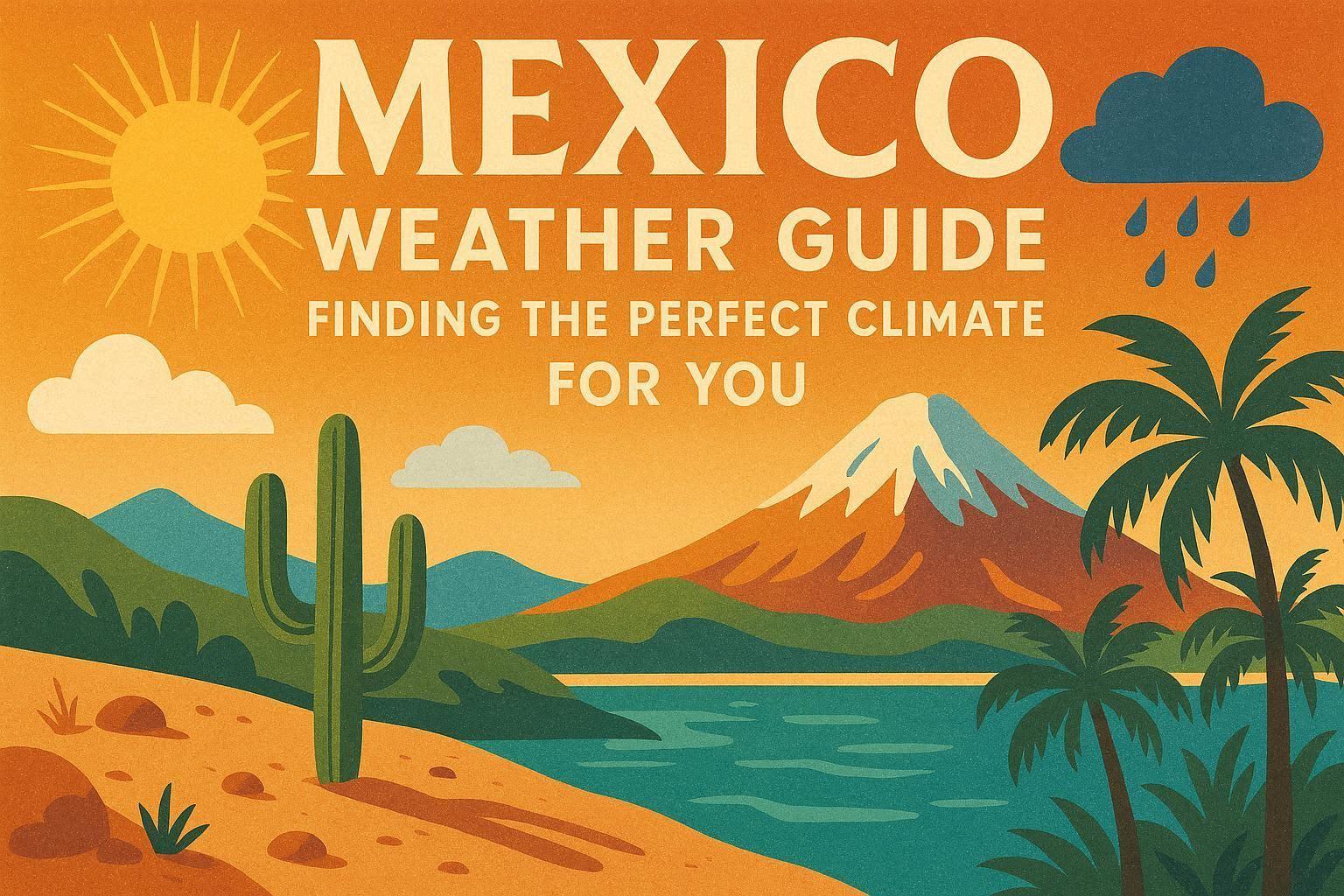
Mexico Weather Guide: Finding the Perfect Climate for You

Mexico offers a surprising range of climates – let's find the best one for you!

Mexico's Microclimates

Mexico Weather Guide: Finding the Perfect Climate for You

Where has the best weather in Mexico

Understanding Mexico's Diverse Weather Patterns

Mexico's not just sunshine and beaches, believe me. I've seen it all after 5 years living all over it. You've got coastal humidity, desert dryness, and even surprisingly chilly mountain air. It's all about altitude and latitude, honestly.

The Tropic of Cancer cuts right through the country, dividing it into temperate and tropical zones. This means you'll find everything from scorching deserts in the north to steamy rainforests down south. The highlands, though, offer a welcome escape from the heat, with spring-like temperatures year-round.

So, if you're thinking of moving or just visiting, knowing the climate is key. I've had clients who moved to the coast expecting constant sunshine, only to be surprised by the rainy season. Don't let that be you! It pays to do your research and understand what each region offers.

  • Altitude plays a huge role: Higher elevations mean cooler temperatures.
  • Coastal areas tend to be more humid than inland regions.
  • The rainy season typically runs from May/June to September/October, but it varies by region.
  • Northern Mexico experiences more extreme temperature variations than the south.
  • Consider microclimates: Even within the same state, you can find drastically different weather conditions.

The Appeal of Mexico's Coastal Climates

Let's talk coasts. If you dream of ocean breezes and year-round warmth, the Mexican coastline might be calling your name. But, it's not all the same. The Pacific side, the Gulf Coast, and the Caribbean each have their own distinct personalities. You'll want to figure out what kind of personality is right for you.

The Yucatan Peninsula, with hotspots like Cancun and Playa del Carmen, boasts that classic Caribbean vibe – turquoise waters, white sand, and tropical heat. Think high humidity, especially during the summer months. I've noticed many people love it, but some find it a bit too sticky.

On the Pacific side, you'll find places like Puerto Vallarta and Mazatlán. The humidity's a bit lower here, and you get some truly stunning sunsets. I personally prefer the Pacific coast, but that's just me. The Gulf Coast, around Veracruz, is known for its warm waters and vibrant culture, but it can get hit by hurricanes.

  • Caribbean coast: Expect high humidity and year-round heat.
  • Pacific coast: Generally drier and cooler than the Caribbean, especially in winter.
  • Gulf Coast: Prone to hurricanes and tropical storms during hurricane season (June to November).
  • Consider the 'winter' months (December to February): Temperatures are milder, making it a popular time for tourists.
  • Check historical weather data for specific locations to get a better sense of average temperatures and rainfall.

Exploring the Highlands: A Temperate Escape

If you're not a fan of intense heat, head for the highlands! Places like San Miguel de Allende, Guanajuato, and even parts of Mexico City Explore Mexico City Prices offer a much more temperate climate. I always recommend the highlands to folks who want sunshine, but not TOO much.

These cities sit at high altitudes, which means cooler temperatures and lower humidity. Think spring-like weather year-round. You might still need a light jacket in the evenings, especially during the winter months, but you'll avoid the scorching heat of the coasts.

I've seen a lot of expats flock to these areas precisely because of the climate. It's comfortable, pleasant, and perfect for exploring the colonial architecture and vibrant culture without sweating buckets. Just remember, the sun can be strong at higher altitudes, so sunscreen is still a must.

  • High altitude = cooler temperatures and lower humidity.
  • Expect spring-like weather year-round in many highland cities.
  • Nights can be cool, especially during the winter months.
  • The sun can be intense at higher altitudes, so wear sunscreen.
  • Consider the elevation when choosing a location: Higher elevations will be cooler.

Understanding Mexico's Rainy and Dry Seasons

Okay, let's get real about rain. Mexico has a distinct rainy season, and it's something you absolutely need to consider. Typically, it runs from May or June to September or October. I've had clients completely unprepared for this, and it can definitely impact your lifestyle.

During the rainy season, you can expect afternoon showers and thunderstorms, especially in the tropical regions. It doesn't usually rain all day, every day, but it's definitely something to be aware of. The dry season, on the other hand, is characterized by sunny skies and minimal rainfall.

The intensity and duration of the rainy season vary depending on the region. The Yucatan Peninsula, for example, tends to get more rain than the northern deserts. And remember, even during the rainy season, there can be plenty of sunshine in between the showers. It's all about being prepared and knowing what to expect.

  • Rainy season: Typically May/June to September/October, but varies by region.
  • Expect afternoon showers and thunderstorms during the rainy season.
  • Dry season: Characterized by sunny skies and minimal rainfall.
  • Consider the impact of rain on outdoor activities and travel plans.
  • Check historical rainfall data for specific locations to get a better sense of average precipitation.

Humidity: A Key Factor to Consider

Humidity. This is a big one, and something I always discuss with my clients. If you're sensitive to humidity, you'll want to pay close attention to this factor when choosing a location in Mexico. The coasts, especially the Caribbean side, tend to be very humid.

High humidity can make it feel hotter than it actually is, and it can also be uncomfortable for some people. It can also impact your health, especially if you have respiratory issues. I've seen people struggle with it, so it's not something to take lightly.

The highlands, on the other hand, offer much lower humidity levels. This is one of the reasons why so many people find the climate in places like San Miguel de Allende so appealing. It's dry, comfortable, and easy to breathe. If you hate humidity, the highlands are your best bet.

  • Coastal areas, especially the Caribbean, tend to have high humidity.
  • High humidity can make it feel hotter than it is and can be uncomfortable.
  • The highlands offer much lower humidity levels.
  • Consider your tolerance for humidity when choosing a location.
  • Look for air conditioning or good ventilation if you're sensitive to humidity.

Winter vs. Summer: Seasonal Temperature Variations

Alright, let's break down the seasons. While Mexico doesn't experience the same drastic temperature swings as, say, Canada, there are definitely differences between winter and summer. Understanding these variations is crucial for planning your move or vacation. I've had people complain about the 'cold' in Mexico, and it's all relative!

During the winter months (December to February), temperatures are generally milder across the country. The highlands can get quite cool, especially at night, but the coasts remain pleasantly warm. This is peak tourist season, for good reason.

Summertime (June to August) brings the heat, especially to the northern deserts and coastal regions. The rainy season is also in full swing, so expect afternoon showers. The highlands offer a bit of respite from the heat, but it can still get quite warm during the day. It's all about finding what you're comfortable with, and planning accordingly.

  • Winter (December to February): Milder temperatures, peak tourist season.
  • Summer (June to August): Hottest temperatures, rainy season in full swing.
  • Highlands: Cooler temperatures year-round, but can get cool at night in winter.
  • Coasts: Warm year-round, but can be very hot and humid in summer.
  • Consider your preferred activities when choosing a season to visit or move.

Beyond Temperature: Other Weather Factors

It's not just about temperature and humidity, other factors like wind, sunshine, and even air quality can impact your comfort and well-being. I've learned this over the years, especially when dealing with clients who have specific health concerns.

Wind can be a major factor in coastal areas. Some beaches are known for strong winds, which can be great for windsurfing but not so great for relaxing on the sand. Sunshine is another important consideration. If you're sensitive to the sun, you'll want to choose a location with plenty of shade or be prepared to wear sunscreen and protective clothing.

Air quality is also something to think about, especially in larger cities like Mexico City and Guadalajara Explore Guadalajara Prices. Air pollution can be a problem, particularly during the dry season. If you have respiratory issues, you might want to consider a smaller town or a more rural area.

  • Wind: Can be strong in coastal areas, impacting beach activities.
  • Sunshine: Consider your sensitivity to the sun and choose accordingly.
  • Air quality: Can be a concern in larger cities, especially during the dry season.
  • Consider the impact of these factors on your health and lifestyle.
  • Research local weather conditions and air quality reports before making a decision.

Making the Right Choice: Considering Your Lifestyle

So, where's the best weather in Mexico? The truth is, it depends entirely on you! There's no one-size-fits-all answer. It's all about your personal preferences and lifestyle. What I always tell my clients is to think about how you want to spend your days. It makes a difference.

Do you love swimming in the ocean? Then a coastal location might be perfect for you. Do you prefer hiking in the mountains? Then the highlands are calling your name. Are you sensitive to heat and humidity? Then avoid the tropical regions. It's really that simple.

Consider your hobbies, your health, and your tolerance for different weather conditions. Do your research, talk to people who live in the areas you're considering, and don't be afraid to visit and experience the weather firsthand. That's the best way to make sure you're making the right choice. I've seen many people skip this important step, and regret it later.

  • Consider your personal preferences and lifestyle.
  • Think about how you want to spend your days.
  • Consider your hobbies, health, and tolerance for different weather conditions.
  • Do your research and talk to people who live in the areas you're considering.
  • Visit and experience the weather firsthand before making a decision.

Want to invest in Mexican real estate?

Connect with a vetted real estate professional who can help you every step of the way.

47 investors got connected last month 🤝

Frequently asked questions

Related Articles

Continue reading with these related guides