Cash is King? Not Anymore.
If I had a peso for every time a client told me, "I heard you can't get a mortgage in Mexico," I'd probably have enough cash to buy a condo in Polanco outright. View Polanco prices to see why that's an expensive joke. For years, the prevailing wisdom in the expat community has been that if you don't have the full purchase price sitting in your bank account, you're out of luck. That used to be true. At the time when I started, financing options for foreigners were practically non-existent or predatory.
That has changed. Drastically.
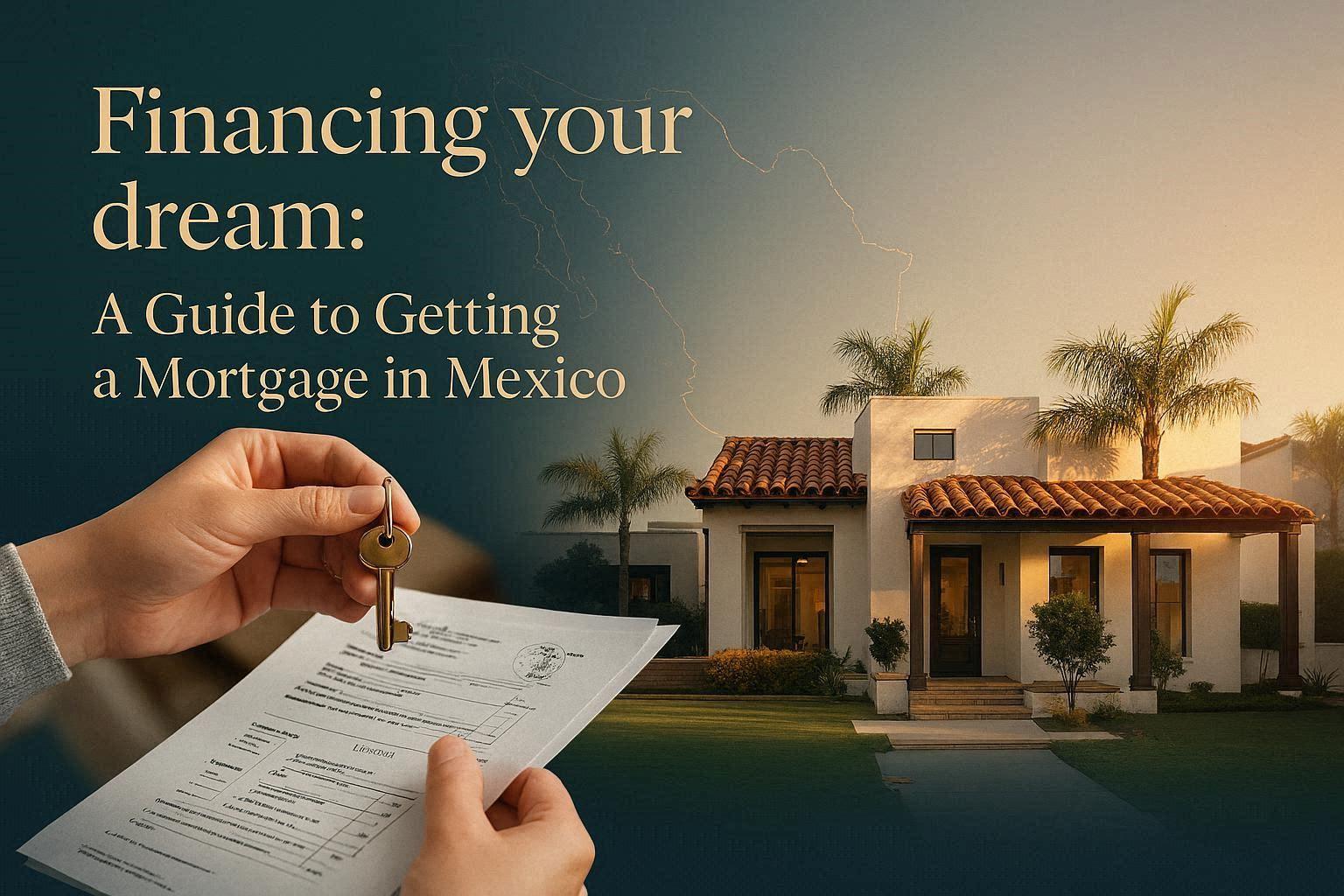
Today, I help clients secure financing almost every week. It's not as easy as walking into a Wells Fargo in the States, and it certainly isn't as fast, but it is entirely possible. Whether you are looking at a vacation home in Puerto Vallarta or an investment property in Mexico City, leverage is a tool you can actually use now. Explore Mexico City price map.
But here is the thing you need to accept right now: the rules are different. The interest rates are higher. The paperwork is heavier. And the patience required? Significant. If you go into this expecting a 30-day closing like you might get in Texas or Toronto, you are going to lose your mind. I'm going to walk you through exactly how this works, stripped of the marketing fluff banks like to put on their websites.
- Mortgages are available for Americans, Canadians, and even Europeans, provided you fit specific profiles.
- You do not always need permanent residency to qualify; temporary residency is often accepted by specific banks.
- The loan-to-value (LTV) ratio for foreigners typically caps at 60-70%, rarely higher.
- Interest rates for peso-denominated loans are historically double what you might see in the US market.
- The 'Avalúo' (commercial appraisal) is the holy grail of the process, not the purchase price.
The Three Paths to Financing
You basically have three buckets when it comes to getting money. Each has its own distinct headache and reward profile. I've seen clients succeed with all three, and I've seen clients fail with all three because they picked the wrong lane for their financial situation.
First, you have the Mexican Banks. This is the most common route for people who actually live here. Banks like Scotiabank, Banorte, Santander, and Intercam are the usual suspects. Scotiabank is often the most friendly to foreigners because of their Canadian roots. If you are buying in a major metro area like Guadalajara, this is often your best bet. View Guadalajara market data shows a market that is very domestic-heavy, where these banks are comfortable lending.
Second, there are Cross-Border Lenders. These are specialized institutions, usually based in the US but lending in Mexico. They are a godsend for Americans who don't have Mexican residency or income history in Mexico. They underwrite you based on your US credit score and US income, but the asset is in Mexico. It bridges the gap. I use these a lot for clients buying vacation rentals in Cabo San Lucas.
Third, there is Developer Financing. This is the wildcard. It's not really a mortgage in the traditional sense. It's usually short-term, offered directly by the builder. You see this constantly in booming pre-construction markets like Tulum. It's flooded with these offers. It sounds great—"No credit check!"—but the terms are usually 12 to 24 months, meaning you still need a massive balloon payment at the end.
- Mexican banks lend in Pesos; cross-border lenders often lend in USD.
- Cross-border loans usually have higher origination fees to cover the international legal complexity.
- Developer financing rarely carries interest but requires 30-50% down upfront.
- SOFOMs (Sociedades Financieras de Objeto Múltiple) are non-bank lenders that can be more flexible but charge higher rates.
- Some US lenders offer 'Cash-Out Refinance' on your US home to buy in Mexico, which is often the cheapest money you can get.
Typical Max LTV (Banks)
70%
Typical Max LTV (Cross-Border)
65%
Developer Finance Term
12-36 Months
The Paperwork Nightmare (And How to Survive It)
Let's talk about the 'Carpeta.' This is your file. In the US, everything is digital. Here, while we are moving that way, banks still love paper. Lots of it. I had a client buying a duplex in Condesa who nearly quit because the bank asked for the same document three times. View Condesa prices. It happens. You have to be persistent.
The first hurdle is your status. To borrow from a Mexican bank, you generally need to be a 'Residente Temporal' or 'Residente Permanente.' Tourists (FMM status) generally cannot get a peso mortgage from a traditional bank like BBVA or Banorte. If you are just a tourist, you are stuck with cross-border lenders or developer financing. There is no way around this.
Next is income verification. If you are self-employed in the US or Canada, get ready for a forensic audit. Mexican banks struggle to understand foreign tax returns. They want to see pay stubs (nóminas) stamped by an employer. If you are a freelancer, you will likely need a 'Perito Traductor' (certified translator) to translate your tax returns and bank statements into Spanish so the underwriter can even read them.
Then comes the Credit Report. Yes, Mexican banks can pull your US or Canadian credit report. They use a system to interface with Equifax or TransUnion. If you have a 600 credit score back home, don't think moving to Mexico wipes the slate clean. It follows you.
- Banks require the 'Constancia de Situación Fiscal' if you are a tax resident in Mexico.
- You will need proof of address (comprobante de domicilio) in Mexico, usually a CFE bill, even for a pre-approval.
- Bank statements must usually cover the last 6 months, not just 3.
- Documents in English almost always require court-certified translation, which costs roughly $50-$80 USD per page.
- Age limits exist: most banks require the loan to be paid off before you turn 75 or 80.
Interest Rates and The Cost of Money
Rip the band-aid off now: You aren't getting 3%. You aren't getting 5%. Historically, Mexican mortgage rates hover between 9% and 12%. I know, it hurts to read that. But you have to look at the context. Inflation in Mexico runs higher, and the risk premium for lending here is higher.
However, don't let the rate scare you away immediately. You have to look at the appreciation. If you bought in Roma Norte five years ago, the appreciation crushed that 10% interest rate. Check Roma Norte price trend. The math can still work, especially if you are generating rental income in Dollars or Euros while paying a mortgage in Pesos (if the exchange rate works in your favor).
Also, understand that Mexican mortgages are almost always Fixed Rate. We don't really do Adjustable Rate Mortgages (ARMs) here the way the US does. This is actually a safety net. You know exactly what your payment will be for 20 years. No surprises.
One massive difference: Life Insurance. It is mandatory. In the US, it's optional. Here, the bank requires you to take out a life insurance policy (Seguro de Vida) attached to the mortgage. If you die, the insurance pays off the house. It's great for your heirs, but it adds to your monthly payment.
- CAT (Costo Anual Total) is the number you need to watch—it combines the interest rate, insurance, and annual fees into one true percentage.
- Damage insurance (Seguro de Daños) is also mandatory and bundled into the payment.
- Some banks offer a 'decremented' payment scheme where you pay more principal early on.
- Pre-payment penalties are rare in Mexico now, but always check the fine print for 'comisión por pago anticipado'.
- Origination fees (Comisión por apertura) usually run 1% to 2% of the loan amount.
Average Interest Rate (MXN)
9.5% - 11.5%
Average Interest Rate (USD Loans)
7.5% - 9.5%
Typical Loan Term
15 - 20 Years
Create a free account to unlock this guide
Create a complimentary PropTrenz account to unlock premium due diligence guides.
Get Started
Create Account
Already Have Account