How to Buy Property Safely in Mexico: A Veteran Broker's Guide to Avoiding Scams in 2026

I've seen every trick in the book; here is exactly how to protect your money and secure your title when buying in Mexico.

I've seen the horror stories. Here is how you write a happy ending.

How to Buy Property Safely in Mexico: A Veteran Broker's Guide to Avoiding Scams in 2026

How to Buy Property Safely in Mexico: A Veteran Broker's Guide to Avoiding Scams in 2026

The 'Wild West' of Mexican Real Estate Market: Why Scams Happen Here

Let's rip the band-aid off right now. Mexico is an incredible place to live, but the real estate market can feel like the Wild West. Over the years I've been selling homes here, I've seen things that would make your hair curl. The biggest shock for my clients from the US or Canada is usually this: there is no national license required to sell real estate in most of Mexico.

That's right. The guy serving you margaritas at lunch could print business cards an hour later and try to sell you a million-dollar villa in Tulum. Because barriers to entry are basically non-existent, the market is flooded with 'agents' who don't know the law. Or worse, don't care.

Scams usually don't look like a guy in a trench coat stealing your wallet. They look like a charming, well-dressed person showing you a stunning property in a hot market like Los Cabos when you are on vacation. They look like a deal that's just slightly better than everything else you've seen. That's how they get you! They prey on your desire to find a hidden gem.

I'm not telling you this to scare you away. I own property in Mexico and I love it here. But you have to walk into this with your eyes wide open. You need to know that the system won't protect you automatically. You have to build your own protection.

  • AMPI (Mexican Association of Real Estate Professionals) membership is a good sign, but not a legal guarantee of competence.
  • Some states like Quintana Roo and Sonora now have state registries for agents, but enforcement is historically loose.
  • Never hand over 'earnest money' or reservation fees directly to an agent's personal bank account.
  • If a seller pressures you with 'another buyer is wiring money right now,' walk away immediately.
  • Scammers often target pre-construction projects because there is no physical building to inspect yet.

The 'Ejido' Trap: Land You Can't Legally Buy

This is the number one way foreigners lose their money: You see a beautiful plot of raw land near the beach in a place like Sayulita or outside of Puerto Vallarta. The price is insanely low. The seller says it's 'Ejido' land but promises they can privatize it for you easily.

Run!

Ejido land is not private property. It is communal land granted to Mexican farmers after the Mexican Revolution. It can't be sold to foreigners. It can't even be sold to Mexican nationals who aren't part of that specific Ejido community, unless it goes through a rigorous, years-long privatization process involving the government. I have a specific guide just on Ejido land if you want to learn more about it. 👉 Ejido Land Deep Dive

I've had clients come to me holding a handwritten 'contract' signed by a local community leader, thinking they own a beachfront lot. They don't own anything! They have no title, no deed, no legal standing. If the community decides to take that land back, you have zero recourse. You are essentially a squatter on land you paid for.

Sometimes, you'll see this in developing areas around Mérida, the growth there is exploding, and unscrupulous developers sell 'investment lots' on Ejido land that hasn't been regularized. Don't touch it unless you see a distinct title (Escritura Pública) registered in the Public Registry.

  • Ask specifically: 'Is this property private title (Escritura) or Ejido?'
  • An 'Acta de Asamblea' is not a title; it's just meeting minutes from the community and holds no weight for a foreigner's ownership.
  • Privatizing Ejido land takes 2-5 years and requires the signature of every member of the agrarian community.
  • Title insurance companies will never insure Ejido land, which is a major red flag.
  • If the price is 50% lower than neighboring lots, it is almost certainly Ejido land.

The Pre-Construction Vaporware: Buying Air
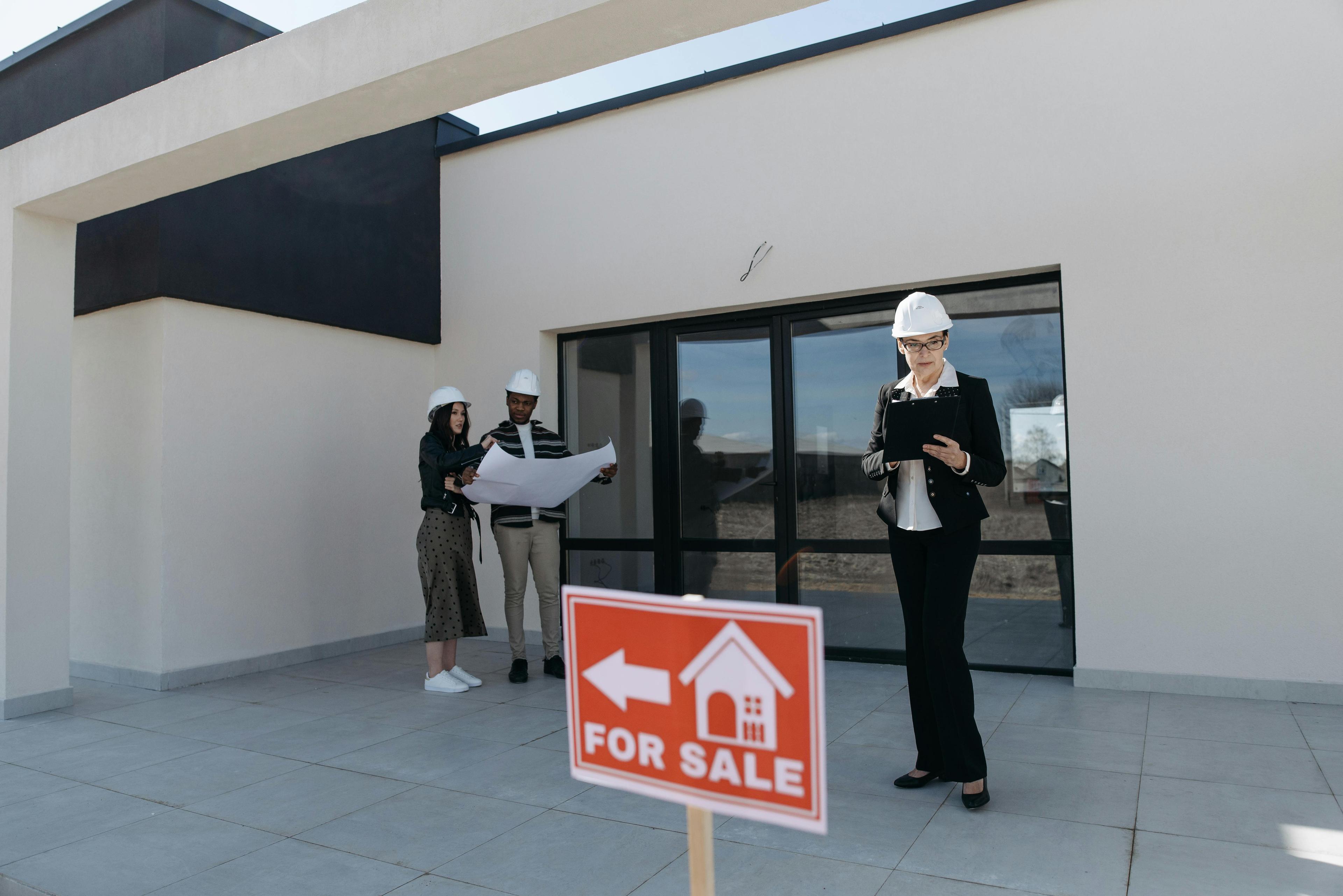
For Sale Sign by Real Estate Agent and Clients on Patio

Pre-construction offers great prices, but it's risky. In high-growth areas like Mazatlán, you see cranes everywhere. The scam here isn't always malicious theft; sometimes it's just incompetence. But the result for you is the same: you lose your hard-earned money.

Here is how it goes down. A developer puts up a flashy billboard and a showroom. They take your 30% down payment. But they don't actually have the permits yet. Or worse, they are using your deposit to finish their last building because they ran out of cash. It's a Ponzi scheme of cement.

I had a friend in Tulum who bought a condo 'delivery in 12 months.' Three years later, it was still a hole in the ground. The developer ghosted. The sales office closed. Because he didn't have a solid contract with penalty clauses, he was stuck in legal purgatory.

You need to verify the developer's track record. Go look at their old buildings. Talk to the people living there. Do the elevators work? Did they get their titles? If a developer has no completed projects, you are the guinea pig. Never be the guinea pig with your retirement savings.

  • Require proof of the 'Licencia de Construcción' (Building Permit) before signing anything.
  • Check if the developer owns the land or is in a 'joint venture' with the landowner (which adds risk).
  • Ensure your contract includes specific financial penalties for delivery delays.
  • Google the developer's name plus the word 'fraude' or 'queja' (complaint) to see forum discussions.
  • Visit the construction site physically; if there are no workers at 10 AM on a Tuesday, that's a bad sign.

The Title Search: Your Shield Against 'Double Sales'

In the US, you take it for granted that the person selling the house owns it. In Mexico, you verify it. Twice. One of the nastiest scams is the 'Double Sale.' This happens when a seller sells the property to you, takes your money, and then sells it to someone else the next week before you register the deed.

This happens in competitive markets like Cabo San Lucas where cash moves fast. The only way to stop this is a rigorous title search and immediate registration. You need a 'Certificado de Libertad de Gravamen' (Certificate of No Liens).

This document tells you the history of the property. It tells you if there is a mortgage on it. It tells you if there is a lien because the owner didn't pay his ex-wife alimony. I once saved a client from buying a condo in Polanco because the title search showed the seller was actually in the middle of a lawsuit over ownership. See Polanco apartment prices. The agent 'forgot' to mention that.

Never trust the documents the seller gives you. They could be old. They could be photoshopped. Your attorney (not the seller's agent) needs to pull a fresh certificate from the Public Registry directly. It costs a few hundred pesos and saves you hundreds of thousands of dollars.

  • The Public Registry (Registro Público de la Propiedad) is where the truth lives; if it's not there, it doesn't exist.
  • Look for 'Anotaciones Marginales' (marginal notes) on the deed which indicate pending lawsuits or claims.
  • Ensure the property dimensions on the deed match the physical reality; encroachments are common.
  • Verify that property taxes (Predial) and water bills are paid up to date; debts follow the property, not the person.
  • In coastal zones, ensure the ZOFEMAT (federal maritime zone) concession is in good standing if applicable.

The Notary vs. The Attorney: Know the Difference

A lawyer in a courtroom

This is where cultural translation fails. In Mexico, a Notario Público is a big deal. They are appointed by the governor. They are powerful attorneys. But—and this is huge—they are neutral. They work for the state, not for you.

Many foreigners think, 'Oh, the Notary will check everything.' The Notary will check the paperwork is legal. They won't check if the contract is fair to you. They won't fight for a better clause if the developer is late. For that, you need your own lawyer.

I always tell my clients in Mexico City, whether they are buying in hip Roma Norte or quiet Coyoacán, to hire an outside attorney. View Roma Norte real estate prices and Explore Coyoacán. Your lawyer reviews the promise of sale contract. Your lawyer yells at the developer. Your lawyer coordinates with the Notary.

Understand why it's advised to hire a lawyer and what he'll do for you. Read more here

The Notary is the referee. Your lawyer is your goalie. Don't play the game without a goalie. A good lawyer will cost you $2,000 to $5,000 USD usually. It is the best insurance policy you will ever buy. If an agent tells you, 'You don't need a lawyer, we have a standard contract,' that is a red flag the size of a stadium.

  • The Notary is responsible for withholding taxes and registering the deed, but not for due diligence on the physical structure.
  • You have the right to choose your own Notary; don't let the seller force theirs on you (unless it's a large developer with a locked mortgage process).
  • Your private attorney should be bilingual and specialize in real estate, not general practice.
  • The 'Promesa de Compraventa' (Promise to Buy) is the most critical contract; once signed, it's hard to change terms.
  • Ask your lawyer to verify the 'Uso de Suelo' (Land Use) to ensure you can actually build what you want.

The 'Fideicomiso' Fear: It's Not a Scam

I have to address this because confusion creates opportunity for scammers. You will hear that foreigners can't own land near the coast or borders. That is technically true, but practically false. We use a trust called a 'Fideicomiso.'

Scammers will sometimes tell you, 'The bank trust is too expensive/complicated, let's just put the title in my Mexican corporation or my cousin's name.' DO NOT DO THIS. That is the scam. The Fideicomiso is the safe, legal, government-sanctioned way for you to own property in the restricted zone.

Whether you are buying in Cancún or Puerto Escondido, the bank holds the title, but you hold the rights. You can sell it, rent it, inherit it, or renovate it. It is your asset. Don't try to bypass the system to save a few bucks on setup fees.

The bank charges an annual fee (usually $500-$700 USD). Pay it. It's the cost of doing business. If someone offers you a 'creative workaround' to the Fideicomiso, they are trying to strip you of your legal protections. Stick to the boring, standard bank trust.

I've written a detailed guide on how Fideicomiso works in Mexico. Read more here 👉 Fideicomiso Deep Dive

  • The Restricted Zone is 50km from the coast and 100km from the border.
  • Fideicomisos are renewable every 50 years; they are not a 'lease' that expires.
  • You can name beneficiaries in your Fideicomiso, which acts as a substitute for a will for that specific property.
  • Major banks like BBVA, Scotiabank, and Banorte all handle these trusts routinely.
  • Setting up a Mexican Corporation is an alternative for commercial properties, but brings more tax complexity.

Financial Safety: How to Pay Without Getting Robbed

Never, and I mean never, hand a suitcase of cash to someone. I know, Mexico is a cash economy in many ways. But for real estate, cash is dangerous and often illegal due to anti-money laundering laws.

For the down payment, use an escrow account. This is standard in the US but newer in Mexico. Companies like Armor Secure or TLA Escrow Services are lifesavers. They hold your money and only release it when the terms of the contract are met. If the seller backs out, you get your money back.

If you are buying in a sophisticated market like San Miguel de Allende, escrow is common. In smaller towns, the seller might resist. 'I need the money now,' they'll say. Stand your ground. If they refuse escrow, ask yourself why they are so desperate for cash before delivering the title.

Also, be aware of the 'declared value' scam. The seller might ask to record a lower price on the deed to save on taxes. They want you to pay the difference in cash. Don't do it. It lowers your cost basis, meaning when you sell later, you will get hit with a massive Capital Gains Tax (ISR) bill. You are essentially paying their taxes for them.

  • Under anti-money laundering laws, there is a hard cap on how much cash can be used for property (approx. $8,000 USD equivalent).
  • Escrow fees are usually around $500-$800 USD; it is worth every penny for peace of mind.
  • Wire transfers should go to the Notary's account or the Escrow account, rarely the seller directly until closing.
  • Always pay in Pesos or agree on a fixed exchange rate in the contract to avoid currency fluctuation disputes.
  • Keep receipts for all renovations; they can be deductible against future capital gains tax.

Red Flags Checklist: When to Walk Away

After years in the market, I've developed a gut instinct. But you don't need a gut instinct; you need a checklist. If you see these signs, close your checkbook and leave.

First, high pressure. 'The price goes up tomorrow' is the oldest line in the book. Real estate isn't a flash sale at a department store. If it's a good deal today, it's a good deal next week. Take your time.

Second, unable to show ID. If the seller or agent can't produce a voting ID (INE) or passport that matches the names on the documents, something is wrong. Identity theft in real estate is rare but real.

Third, the 'friend' discount. If you met a guy at a bar who says his aunt is selling a place in Chapala for half price, it's a scam. Deals that are 'too good to be true' are always, without exception, scams. Market value is market value. Nobody gives away houses.

Finally, trust your lawyer. If your attorney says the paperwork looks messy, don't argue. Don't fall in love with the house so much that you ignore the legal reality. There will always be another house.

  • Refusal to provide a copy of the deed (Escritura) for review.
  • Seller asks for a deposit before you've even seen the property.
  • The name on the bank account doesn't match the name of the seller.
  • The property is currently occupied by 'caretakers' who won't let you inspect certain rooms.
  • The agent discourages you from speaking to other owners in the development.

Want to invest in Mexican real estate?

Connect with a vetted real estate professional who can help you every step of the way.

47 investors got connected last month 🤝

Frequently asked questions

Related Articles

Continue reading with these related guides